
Service Number: 1043
Regiment & Unit/Ship:
Royal Navy
Date of Death
26th November 1914
Age 45 years old
Location of Death
HMS Bulwark
Place of Rest
Odiham Cemetery
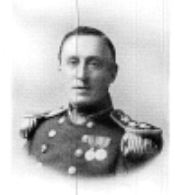
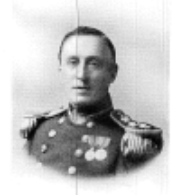
Guy Lutley Sclater was born at Hoddington, Upton Grey on 15 August, 1868. He was the third son of Philip Lutley Sclater, the eminent zoologist, and Jane Ann Eliza (née Hunter-Blair), who lived at The Priory, Odiham. The archives of the Institution of Electrical Engineers (IEE), of which Guy was a member, hold records of his life and death in the IEE obituary notices and in a biography in their Roll of Honour. The IET, as it is now, have kindly made these details available for this tribute[1].
Guy was educated at Woodcote School in the village of South Stoke, near Wallingford, where he was a pupil in 1881.[2] Later that year he moved to Burney’s Royal Naval Academy at Gosport and in February 1882 he joined the Royal Navy as a cadet, aged 13½, completing an instruction course in HMS Britannia two years later[3]. His first appointment as Midshipman was to HMS Temeraire (1885 – Malta and the Mediterranean); followed by transfer to HMS Raleigh (West Africa to the Cape of Good Hope); and finally with the Training Squadron in HMS Active. Two months before his 20th birthday, Guy was promoted Sub-Lieutenant and gained entry to an advanced naval course at the Royal Naval College, Greenwich in September 1888. This was followed by further instruction, this time in gunnery, in HMS Excellent. Guy graduated from this training at the end of 1889 with Certificates in Seamanship, Navigation, Torpedo Work, Gunnery and Pilotage. He was duly appointed to the flagship of the China Station, HMS Imperieuse, in which he served until his promotion, at the age of 22, to Lieutenant in June 1891.
For the next two years Guy was in Australian waters, in HMS Royalist, until September 1893, when he was assigned to a three year course of instruction in torpedo work at the Royal Naval College and the Torpedo School Ship at Portsmouth, the shore establishment, HMS Vernon. At the end of this course the knowledge gained by Guy was put to use in his appointment to HMS Hawke in the Mediterranean. The further experience he gained from his time spent in HMS Hawke was then put to good use in his next role, Staff Instructor in Electricity at HMS Vernon, the Portsmouth shore establishment. He remained in Portsmouth until just after his promotion to Commander in 1902, when he was transferred to London to take up the role of Secretary to the Admiralty Committee on the Electrical Equipment on HM ships. Guy’s knowledge, ability and standard of work were soon recognised by the Lords of the Admiralty, who appointed him as a representative on the Engineering Standards Committee. He was elected a Member of the Institution of Electrical Engineers in 1903[4].
In November 1903, HMS Donegal was commissioned at Devonport and Guy was appointed to the ship, which then joined the Cruiser Squadron. When this ship was transferred to the Reserve two years later, Guy took up duties in the Controller’s Department supervising specialist work on ‘T’ fittings to ships being built by contractors. He was ‘borne additional on HMS President whilst holding this appointment’ [sic] In September 1907 Guy married Evelyn Muriel Chappell and the couple set up home in The Close, Odiham.
On the last day of 1907 Guy was promoted to the rank of Captain and four months later was undertaking more training, this time at the War College, Portsmouth. During the summer of 1908 he was also ‘borne additional’ [sic] on HMS Devastation, serving on the Staff of Captain G Le C Egerton, Chief Commander of the Red Side Torpedo Craft in Naval Manœuvres. In late summer his first child, Cecil Edward Lutley, was born. Sadly, this child died in infancy early in 1909. By October 1908 Guy was back on another instruction course, this time on military subjects, at the Staff College, Camberley.
Guy returned to sea early in 1910 commanding HMS Tyne, the depot ship for ‘T’ boat destroyers at The Nore, before shortly transferring to HMS St George, Third Destroyer Flotilla (Home Fleet), in which he was enumerated as Captain in the census of 2 April 1911. The following month he was temporarily in command of HMS Euryalus, Devonport, on the Staff of the Inspector of Target Practice. During this time another son, Claude Edward Lutley (January 1910), was born.
All Guy’s military and specialist skills were put to further use by the Royal Navy early in 1912, when he was given command of HMS Hawke in the Home Fleet with the objective of ‘carrying out certain special services’. In December of that year, a daughter, Flora Lutley, was born just after Guy’s return to the Third Fleet at The Nore, initially to command HMS Glory, then HMS Aboukir, and eventually, in November 1913, HMS Bulwark. He was in HMS Bulwark, a fourteen year old pre-Dreadnought battleship[5], when war was declared. He was preparing his ship and crew for action on that fateful day in November 1914 when the explosion occurred which resulted in so many deaths so early in the conflict. The loss of such an experienced officer was expressed by the Commander-in-Chief of The Nore –
“We realize that we have lost not only a friend, but a trusty and most able officer of a type which we can hardly spare. His constant example of devotion to duty will bear good fruit for years to come.” [6]
Captain Guy Sclater’s body was recovered and taken from Chatham Royal Naval Hospital to Gillingham Railway Station escorted by a long procession of naval and military officers. At the station, buglers sounded the Last Post. The coffin was then transported to Winchfield Station and finally to Odiham. The burial service on 2 December 1914 was attended by family mourners, friends, local dignitaries and residents. Military attendees included Navy and Army representatives, officers of the Naval section of the Royal Flying Corps, a number of Royal Navy ‘bluejackets’, other Army and Territorial officers, Red Cross nurses and some of the wounded receiving treatment in local hospitals. Following the church service Guy Lutley Sclater’s coffin was conveyed on a gun carriage to the Cemetery for burial with full military honours[7]. He was awarded the 1914-15 Star, the Victory and British War Medals posthumously[8].
[1] Journal of the Institution of Electrical Engineers, Vol. 53, 1915, p. 871 and IEE First World War Roll of Honour List, pp.254-255, both from the IET Archives, Savoy Place, London, WC2R 0BL
[2] 1881 Census Enumerator’s Book, Wallingford, Berkshire, ref. RG11; Piece: 1295; Folio: 105; Page: 13
[3] The following details of Guy Lutley Sclater’s Royal Naval career is taken from IEE First World War Roll of Honour List, pp.254-255, the IET Archives, Savoy Place, London, WC2R 0BL
[4] Journal of the Institution of Electrical Engineers, Vol. 53, 1915, p. 871
[5] Report of the HMS Bulwark explosion in the Hants and Berks Gazette, 28 November 1914
[6] IEE First World War Roll of Honour List, p.255, the IET Archives, Savoy Place, London, WC2R 0BL
[7] All these details are taken from the obituary in the Hants and Berks Gazette, 5 December 1915
[8] www.findmypast.co.uk/records/military/medal-rolls/royal-navy-officers/
 Captain GUY LUTLEY SCLATER Poppy Garden